
Enhance Property Listings with Beyond All Media's Photography
Updated: Oct 4
Good photos and video are what get a property noticed, and they go a long way toward getting it sold or rented. We've spent years getting that part right at Beyond All Media, which you might remember as SC Aerial Imagery.
The harder question is not whether to hire a photographer. It's what to actually order. Most media menus read like a parts list, and nobody explains which parts a specific property needs. Here is the plain version.

What is actually on the menu
We cover a lot of ground. Interior and exterior photos and video, drone photos and video, professional editing, custom landing pages and marketing materials, 2D and 3D floor plans, 3D video renderings, Matterport tours, and retainer packages for clients who book us regularly. We've been doing this for over a decade, we're licensed and insured, and we back every job with a 100% satisfaction guarantee.
That is the full list. Almost no single listing needs the full list.
What each piece is actually for
Every item on that menu answers a different buyer question, and knowing which question your listing has is most of the decision.
Stills answer "do I want to see this in person." Every listing needs them. This is the one line item that is never optional.
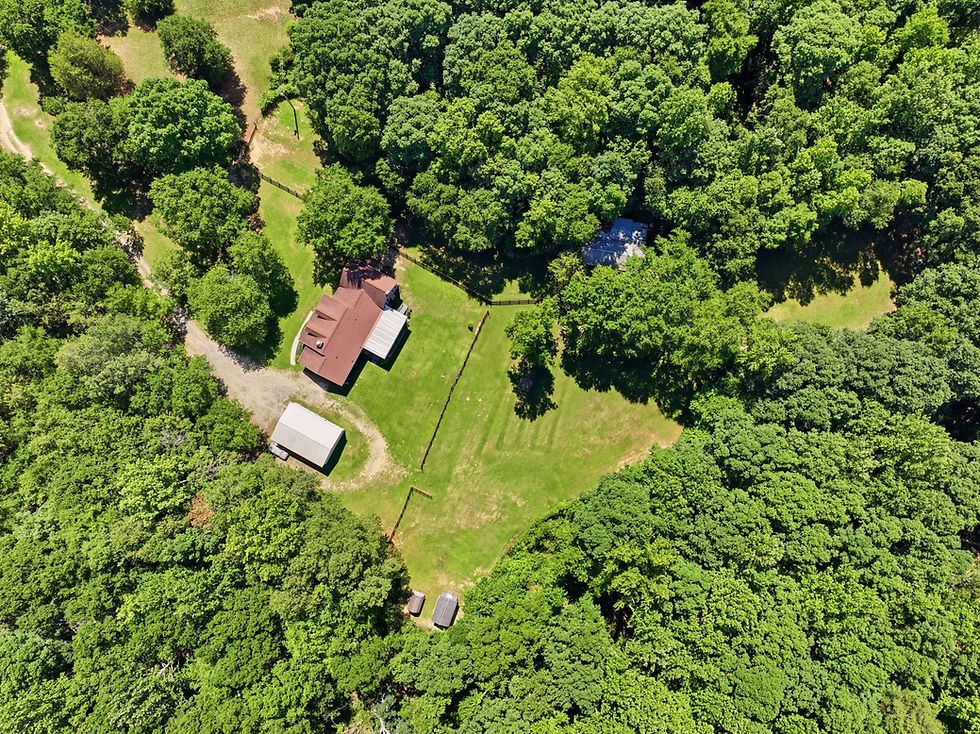
Drone answers "what is around it." Land, acreage, waterfront, a corner lot, proximity to a lake or a golf course, a big yard. On a townhouse with no yard it mostly photographs the neighbors' roofs.
Video answers "what does it feel like to walk through." Strongest on homes with flow, views, or a wow moment. Weakest on small boxy floor plans where the walkthrough is over in fifteen seconds.
Floor plans answer "how does this fit my furniture and my family." Cheap, unglamorous, and one of the highest value things you can add to a listing with an unusual layout.
3D tours answer "can I decide without flying in." Built for relocation buyers, out of state investors, and anyone shopping across a distance.
Landing pages and marketing materials answer "how do I get this in front of people." Useful when you are running paid social or pitching a seller on your marketing.
If you want the longer version of how we think about all of this across both states, it lives in our 2026 listing playbook.
How to decide what a specific property needs
Start with the property, not the price. A four hundred thousand dollar house on five acres needs drone more than a seven hundred thousand dollar condo does. A 1930s house with a strange room layout needs a floor plan more than a builder spec home does, because the spec home's layout is already obvious from six photos.
relocation buyers behave differently, which we get into in our piece on 3D tours and buyers shopping from out of town.
And be willing to order less. A rental turnover, an as is flip headed to a cash buyer list, or a listing that is already spoken for does not need the whole package. Stills and a floor plan will do the job, and spending the rest of the budget on a property that needs it is the better trade.
Questions worth asking before you hire anyone
This applies to us and to everybody else in the market. If a photographer cannot answer these quickly, that tells you something.
Are you insured, and can you send a certificate? Property managers and commercial clients usually need this in writing before anyone sets foot on site.
If drone is involved, are you a certificated Part 107 remote pilot, and do you pull LAANC authorization when the property sits in controlled airspace? Plenty of the Upstate, Columbia, and the Richmond area does.
What is the actual turnaround, in hours or days, and what happens when weather kills a shoot day?
What are the usage rights? Who can use the images, for how long, and what happens to them when the listing closes?
Is there a reshoot policy if something in the gallery is not right?
Who we shoot for
We work with all kinds of clients. Residential and commercial real estate, property management companies, investors, local government, construction companies, golf courses, and commercial businesses of every stripe. A lot of our focus goes to keeping agents booked and setting up long-term contracts with property managers.
Those two groups want different things. An agent wants speed and a gallery that makes the listing look like the nicest one on the street this week. A property manager wants consistency across a portfolio, so unit 4B from last March and unit 12A from this Tuesday look like they came from the same building. Retainer packages exist mostly for that second problem, and they make scheduling easier when you are turning units on a regular cadence.
The part that is not the photographer's job
A good gallery starts before anyone shows up with a camera. Lights on and matched, cars off the driveway, counters cleared, blinds set the same way in every room. It is not glamorous and it makes a larger difference than most of the paid add-ons. Our room by room prep checklist is written to be forwarded straight to a seller.

What a shoot day actually looks like
Most people have never watched one, so here is the shape of it. We show up at the scheduled time, do a quick lap of the house with whoever is there, and agree on what is getting shot and what is staying out of frame. Then we work exterior first if the light is right, or interior first if it is not, and we come back outside once the sun has moved.
Time on site tracks square footage more than anything else. An 1,800 square foot house runs about an hour. Push past 4,000 and you are looking at two hours or more, longer if there is a detached shop, a dock, or acreage that needs the drone. Adding a floor plan scan or a Matterport tour roughly doubles it, because those are separate passes through every room.
Standard turnaround on stills is next business day. Video and 3D tours take longer because they get edited, usually two to three business days. If you have a Thursday listing deadline, book the shoot Monday or Tuesday and you will never be sweating it.
Book around the sun, not just the calendar
The cheapest upgrade to a listing gallery is picking the right time slot, and it costs nothing. A house whose front faces east photographs best in the morning. West facing fronts want late afternoon. A north facing front stays flat most of the day, and that is the one where twilight earns its money.
Season matters too. Winter light in the Upstate goes soft and low by four, which is lovely for exteriors and short on time if the property is big. Richmond summers push the good exterior window to before ten or after six, because midday in July lays hard shadows across the front of the house and blows out the sky behind it. If you know the address, you already know the better slot. It just takes asking before the appointment gets booked.
What actually lands in your inbox
Everything above is what you're buying. Here's what comes back. A standard still shoot on a mid-size house lands somewhere around 25 to 40 finished images, and you get them twice: a full resolution set for print and for anything you might want to crop into, and a web set already sized down.
That second set does more work than it sounds like. Most MLS systems re-compress on upload and several cap the file size outright, so a 6000 pixel original goes in clean and comes back soft and blotchy around the edges. The web set is built to survive that trip. Drone stills come through the same way. Video arrives as an MP4, plus a vertical cut if you asked for one at booking, since cropping a horizontal video to vertical afterward throws away half the frame and usually the part you wanted. Floor plans come as a PDF for print and a PNG for the listing itself.
Who owns the photos, and what you can do with them
Nobody asks this until there's a problem, and then it's a real one. In real estate photography the photographer holds the copyright and the client gets a license to use the images. The part worth reading is what that license actually covers.
A normal listing license covers marketing that property while you're the listing agent. MLS, the portals, social, print, your own site. Three things it usually doesn't cover, and these are the ones that turn into arguments. A seller carrying the photos over to a different brokerage after your agreement ends. A builder reusing one house's interiors across a whole subdivision's marketing. Anybody reselling the images to a third party.
None of that is a trap, and all of it is cheap to settle at booking. If you manage rentals and want to reuse a turnover set for years across several platforms, say so before the shoot and get the terms in writing. Ask whoever you're considering for their license language up front. A vendor who can't produce it in writing is telling you how that conversation is going to go later.
Getting a listing on the schedule
In a market where the photos make the first impression, a solid media partner can be the difference between a listing that gets scrolled past and one that gets a second look. We're good at catching what makes each property special and putting it front and center. Good photography isn't only about pretty pictures. It's about telling the story of a place so the right buyer feels it.
If you're an agent who wants stronger listings, or a property manager trying to tidy up your marketing, get in touch with Beyond All Media. Carolinas (864) 714-0724, Richmond (804) 913-3013.


Comments