
Lakefront Listing Photos on Hartwell and Keowee: Water Levels, Docks and What the Drone Has to Prove
You just took a lake listing. The seller says lakefront, the tax card says lake access, and the buyer coming down from Charlotte on Saturday is going to ask the same three questions every lake buyer asks. How deep is the water at the dock? How many steps from the back door to the boat? What does the view look like in February? Your photos either answer those or they don’t. On Hartwell and Keowee the answers change with the season and with which lake you’re standing on, so here’s how we shoot them.
Two lakes, two sets of rules
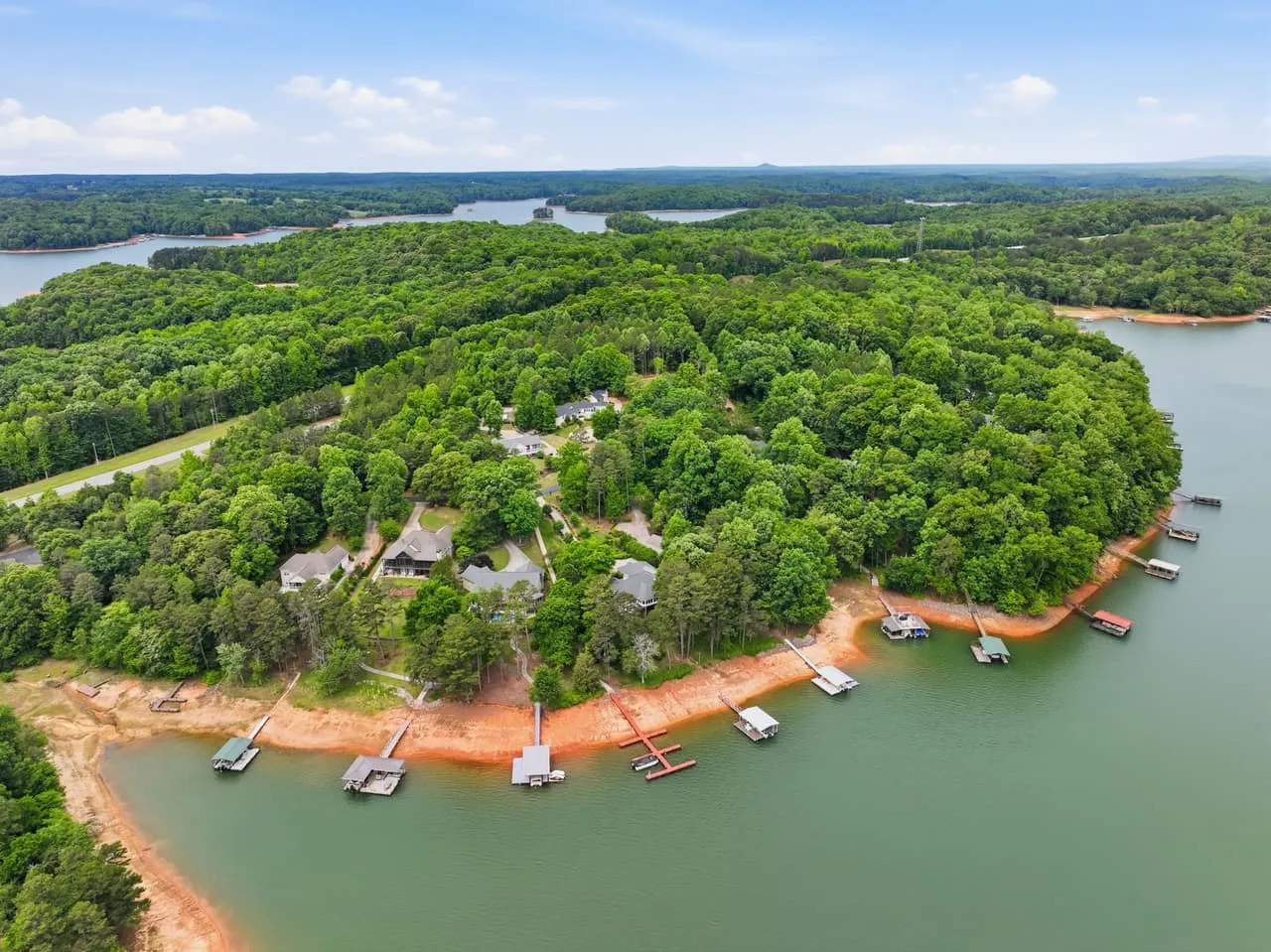
Hartwell and Keowee sit about twenty minutes apart and behave like different lakes entirely. Hartwell is an Army Corps of Engineers lake. Full pool is 660 feet, the Corps posts the level every day, and it moves. Late summer into fall it often sits several feet down, and you see that as the ring of red clay between the grass and the water. Most Hartwell docks float for exactly that reason. The strip of ground right along the shore is usually Corps property above the full pool line, so the dock sits there under a permit and the lot line stops a little short of the water. That’s normal here. A buyer from out of state doesn’t know it’s normal, and your listing is where they find out.
Keowee is Duke Energy’s lake. Full pond is 800 feet and the level stays much closer to full through the year, so the shoreline reads clean in photos and the water runs clear and blue-green instead of Hartwell’s tea color. Docks go through Duke’s shoreline program instead of the Corps. The north end of the lake backs up against the mountains, so the right drone angle puts the Blue Ridge on the horizon behind the house.
What that means for the shoot: on Hartwell, check the lake level before you book. On Keowee, check the forecast, because clear water only looks clear under sun.
Book the drone for the water, not the house
Ground exteriors want low sun. Water wants high sun. A lake at 8 a.m. in November is a sheet of grey steel. That same water at one in the afternoon is green on Hartwell and blue on Keowee, and near the bank you can see the bottom. If you only have one shoot window, give the drone the middle of the day and the ground photos the last two hours of light, or split it into two short visits.
Three aerials every lake listing needs:
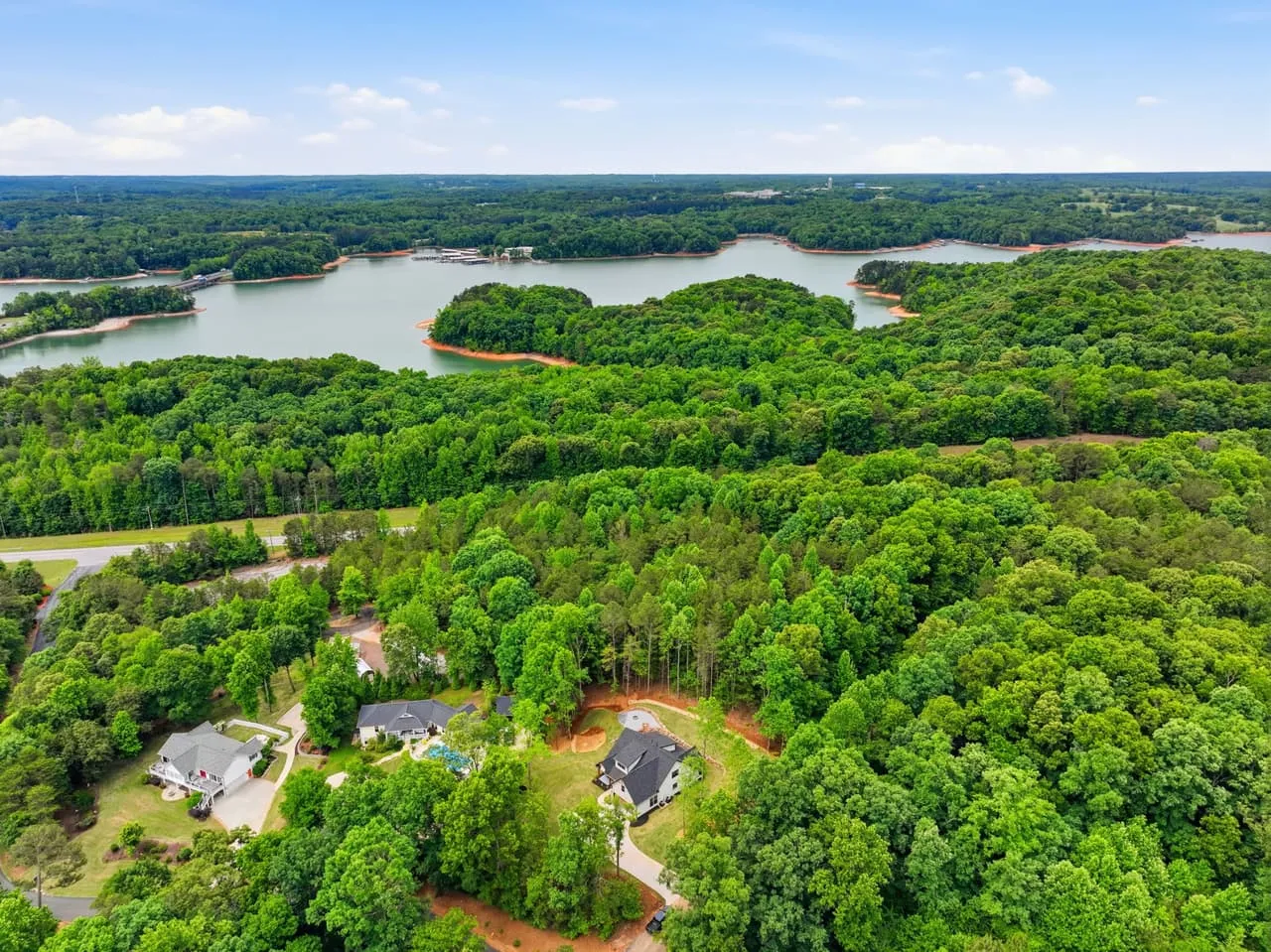
- A straight-down frame over the lot with the house, the path and the dock all in it. This is the one that answers how far the walk is, and nobody has to take your word for it.
- An oblique from out over the water looking back at the house, flown a little higher than the dock roof. This is the photo buyers screenshot and send to their spouse.
- A high, wide shot that shows where the lot sits on the lake. Cove or big water, how deep the cove runs, and which way the view opens.
That last one matters more than agents expect. A cove lot is sheltered and calm, and in a drawdown a shallow cove can turn into a mudflat. Big water has the long view and the boat traffic. The wide aerial shows which one you’ve got. Hiding it in the photos just costs you a wasted showing.
The red clay question
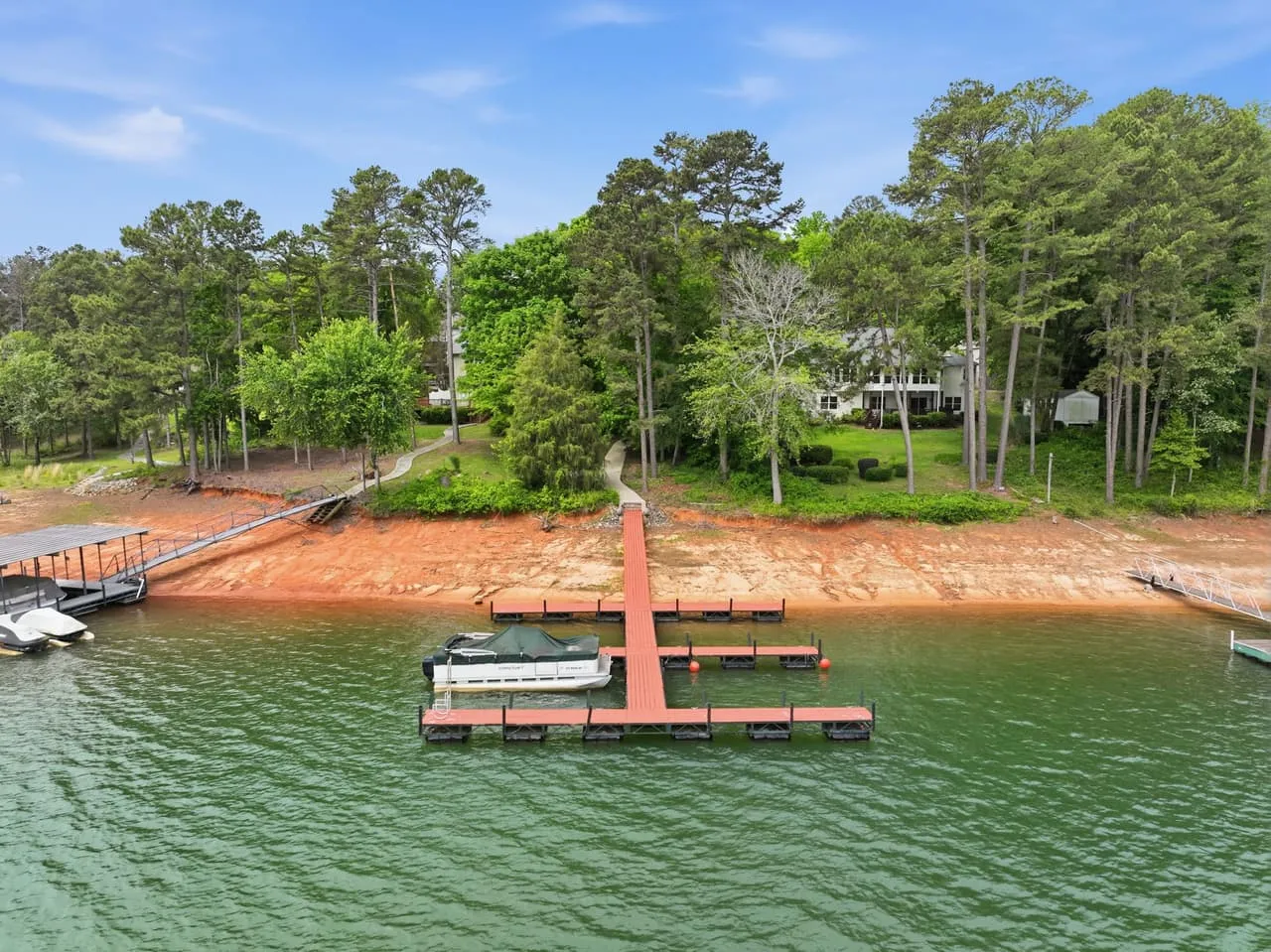
If Hartwell is down when we shoot, the ring is going to be in the frame. You have two honest options. Wait for the level to come back up, which on Hartwell usually means spring, or shoot it as it is and frame smart. What you don’t do is clone the clay out or paint water in. The buyer sees the ring from the driveway and every other photo in the set turns suspect. Here’s how we handle it: the dock gets shot from the water side at a low angle so the dock, the boat and the water fill the frame, and one wide shot stays in the set that shows the shoreline exactly as it was that day. Then put the depth at the dock in the remarks. The seller knows the number. It matters more to a lake buyer than the countertops do.
November is when the view gets honest
Leaves are coming down across the Upstate right now, and by Thanksgiving most of the hardwoods between a house and the water are bare. A seasonal lake view turns into a real one for about four months. If you’re listing in the next few weeks, that works in your favor: you get water in the window from rooms that were a green wall in July. The flip side is that a wooded lot which hides the neighbors all summer shows every one of them in winter. Shoot the view from the primary bedroom and from the deck at the height a person actually stands, and let the buyer see what they’d see.
If you listed in August and you’re still on the market, this is the month to re-shoot the view. The photo that sells a lake house is often the one looking out from the kitchen sink, and that photo changes completely once the leaves drop.
Airspace: two airports and Clemson game days
Any drone work for a listing is Part 107 work: a licensed pilot and an airspace check for the exact address before anyone promises aerials. Two local things to know. Oconee County Regional Airport sits between Seneca and Clemson, and Anderson Regional sits south of Anderson, so a lake house near either may need an airspace authorization first. That takes a few minutes through LAANC when the location qualifies and longer when it doesn’t. The second is football. Memorial Stadium sits right on the Seneca arm of Hartwell, and the FAA closes the air within three nautical miles of a Division I stadium from an hour before kickoff until an hour after. A lot of lake houses in Clemson and the near side of Seneca are inside that circle. A home-game Saturday is not a drone day there. Book aerials for a weekday or an away week.
What to tell the seller before we pull in
- Boat in the slip and uncovered, or gone. A boat under a tarp reads as storage, not as a lake day.
- Lift all the way up or all the way down. Halfway looks broken.
- Dock cleared: noodles, life jackets and coolers go inside. Two chairs facing the water can stay.
- Jet skis, kayaks and the floating mat either staged neatly or out of the frame.
- Walk the shoreline and pick up the driftwood. Trim the path to the dock so the straight-down shot shows a path and not a thicket.
- Dock lights working if we’re adding a twilight shot. A lit dock over dark water is the strongest twilight frame a lake house has.
- Dock permit and shoreline paperwork in a folder. The buyer’s agent will ask within the first day, and both lakes have their own transfer process.
When the drone is the wrong thing to buy
Some honesty, because it saves you money. A lake-access lot in a subdivision with a community dock a half mile away will photograph from the air as a house a long way from the water, because that’s what it is. One aerial for context is plenty. Spend the rest of the budget on interiors and the walk to the community dock. Same with a flat grey sky. Water in overcast light looks like a wet parking lot, and no edit fixes it. On those days we’ll ask to move the aerials a day or two.
If the listing is in Greenville, Spartanburg or Anderson rather than on the water, our drone guide for Upstate listings covers what an aerial has to prove on a regular lot, and the 2026 listing playbook walks through the whole shoot. Prepping the inside of a lake house is the same as any other house, and the room-by-room checklist has that covered.
Listing on Hartwell or Keowee this month? Beyond All Media shoots lake listings across the Upstate, drone included. Call us in South Carolina at (864) 714-0724 or in Richmond at (804) 913-3013, or send the address and we’ll check the lake level and the airspace before we quote it.